
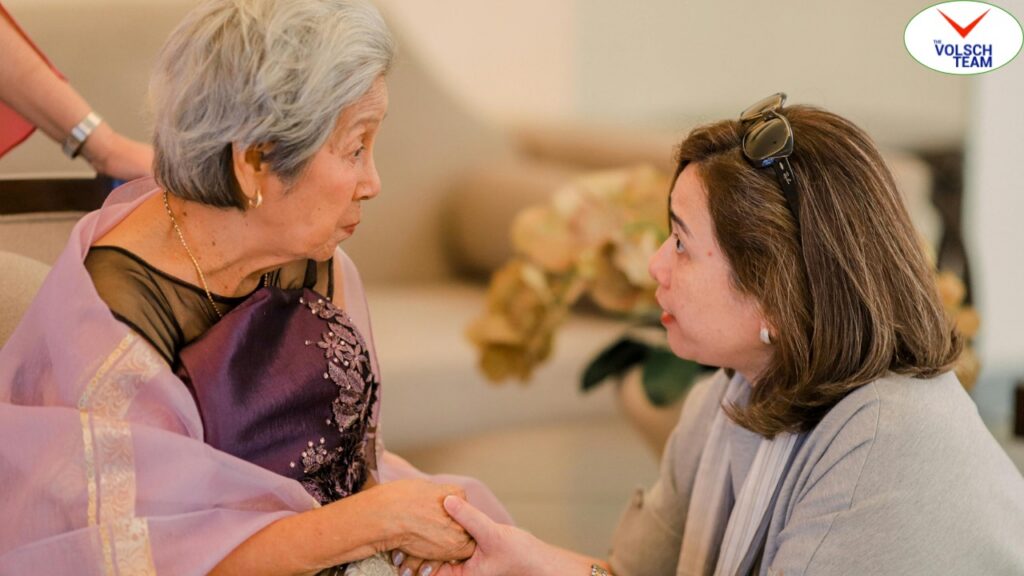
The holidays have a way of bringing us together. Around the table, we catch up on careers, grandchildren, travel, and all the little moments we’ve missed throughout the year.
But there’s one conversation that often gets left for another day.
What does the future look like for our parents, ourselves, and the homes we’ve spent so many years building our lives around?
It’s not necessarily a conversation about selling a house. It’s about understanding what matters most to the people we love, what they envision for the years ahead, and whether we’ve taken the time to listen.
Because sometimes life changes before we’ve had those conversations.
When Life Begins Making the Decisions
I’m currently helping a woman in her 80s navigate a significant transition.
She has reached a point where living alone is no longer practical. Yet, if she had her preference, she would remain right where she is, in the home and community she’s known for years.
One of her daughters has stepped forward to help coordinate a major relocation. And this isn’t simply a matter of packing boxes.
There are banking arrangements to change, new doctors to establish, antiques and personal belongings to sort through, sales to organize, movers to coordinate, and countless details that come with relocating a lifetime of memories.
Another family member has chosen not to participate.
But what has impressed me most is how the daughter who is helping has approached this transition.
She hasn’t simply taken over and started making decisions for her mother.
She includes her in the conversations, presents options, and gives her opportunities to express her preferences. When the decisions become overwhelming, she steps in to investigate the possibilities, narrow the choices, and offer thoughtful recommendations.
She’s helping her mother move forward without taking away her voice.
And I think there’s an important lesson in that.
Sometimes loving someone through a transition means recognizing when they need help while continuing to honor their independence, dignity, and wishes.
This mother may not have chosen this particular chapter of her life, but she’s being given the opportunity to participate in how it unfolds.
And isn’t that what most of us would want?
Why Do We Wait to Have These Conversations?
For some, talking about the future feels uncomfortable.
Parents may worry that their children will interpret the conversation as a sign they’re losing independence.
Adult children may hesitate because they don’t want to appear intrusive or suggest that Mom or Dad can no longer manage their own affairs.
And sometimes everyone simply assumes there’s plenty of time.
But waiting until circumstances require immediate decisions can make an already emotional situation even more difficult.
What I’ve observed over the years is that family members don’t always have the same understanding of a parent’s wishes.
One child may believe Mom always intended to stay in her home. Another may remember conversations about moving closer to family.
And when expectations about responsibilities, personal belongings, or inheritance enter the picture, those differences can become even more complicated.
Having conversations early doesn’t guarantee everyone will agree.
But it gives the person whose future is being discussed the opportunity to express what matters most while they can still thoughtfully consider their options.
Five Questions Worth Asking Before They’re Needed
These aren’t questions that require immediate decisions. They’re simply a place to begin.
1. What would you like your life to look like five or ten years from now?
Rather than starting with whether someone should sell their home, begin with how they envision their future.
Do they want to remain where they are? Travel more? Spend more time with grandchildren? Live closer to family or friends?
Understanding the life someone wants helps guide the decisions that follow.
2. If maintaining your home or living independently became more difficult, what would you want us to consider?
Would additional help at home be their preference? Would they consider a smaller home, a senior living community, or relocating closer to loved ones?
The goal isn’t to make those decisions today. It’s to understand which possibilities they would welcome and which might be difficult for them.
3. Who would you want involved in helping you make important decisions?
This question is particularly valuable when adult children live in different cities or states.
Not everyone has the same availability, abilities, or willingness to help.
Discussing expectations before assistance is needed can prevent misunderstandings and help identify who is best positioned to take on different responsibilities.
4. Do the people you trust know where your important information is kept?
Property documents, insurance information, banking contacts, estate planning documents, and the names of trusted professionals can become critically important during an unexpected transition.
Knowing where information is located doesn’t automatically give someone legal authority to act. That may require properly prepared documents and guidance from an estate planning attorney.
But having information organized can eliminate considerable confusion.
5. What matters most to you if life doesn’t unfold exactly as you planned?
This may be the most meaningful question of all.
Is it remaining close to friends? Maintaining independence as long as possible? Staying connected to a church or community? Having familiar belongings nearby? Being included in decisions rather than having others decide everything?
Sometimes the answers reveal something much more important than what should happen to the house.
They reveal what makes someone feel at home.
Listen Before Offering Solutions
It’s natural to want to solve problems for the people we love.
We see a challenge and immediately begin thinking about what needs to happen next.
But listening can be more valuable than arriving with a solution.
A parent may already recognize that change is approaching but need time to process what that means.
Another may have been quietly considering a move but hasn’t found the right opportunity to share those thoughts.
And sometimes the best way to help is exactly what I’ve witnessed with the mother and daughter I’m currently assisting.
Present the options. Allow room for preferences. Help investigate the details. And when the decisions feel overwhelming, offer guidance without unnecessarily taking control.
There’s a meaningful difference between making decisions for someone and helping them make decisions.
This Holiday Season, Make Room for One More Conversation
As we gather around tables, share meals, and enjoy time with people we may not see often enough, perhaps we can make room for a conversation that goes a little deeper.
It doesn’t need to be formal. It certainly doesn’t need to involve everyone sitting down with a stack of documents.
It might begin with a simple question.
“What would you want the next chapter of your life to look like?”
Then give the person time to answer.
In A Nutshell . . .
After more than 25 years helping people navigate real estate decisions, including probate and trust property transitions, I’ve learned that the home itself is often only part of the story.
The deeper story involves independence, memories, relationships, responsibilities, and the desire to feel heard.
Not every conversation will lead to a move. Not every family member will agree. And not every future challenge can be anticipated.
But understanding someone’s wishes before circumstances begin narrowing their choices is a gift worth giving.
Because the most important part of planning for someone’s future isn’t deciding what happens to their house. It’s making sure they have a voice in what happens to their life.
About the Author
Charlotte Volsch is an Estate Property Advisor and Probate & Trust Real Estate Specialist with more than 25 years of experience serving homeowners throughout the High Desert and Inland Empire of Southern California. Having assisted with more than 230 estate property sales, she brings practical experience and a compassionate perspective to the decisions surrounding inherited homes, aging homeowners, and significant life transitions. Her approach focuses on helping people understand their options, navigate responsibilities, and make informed decisions with confidence.
Charlotte Volsch | Estate Property Advisor & Probate & Trust Real Estate Specialist | 230+ Estate Property Sales | The Volsch Team at Volsch Enterprises, Inc. | 760-912-8905