
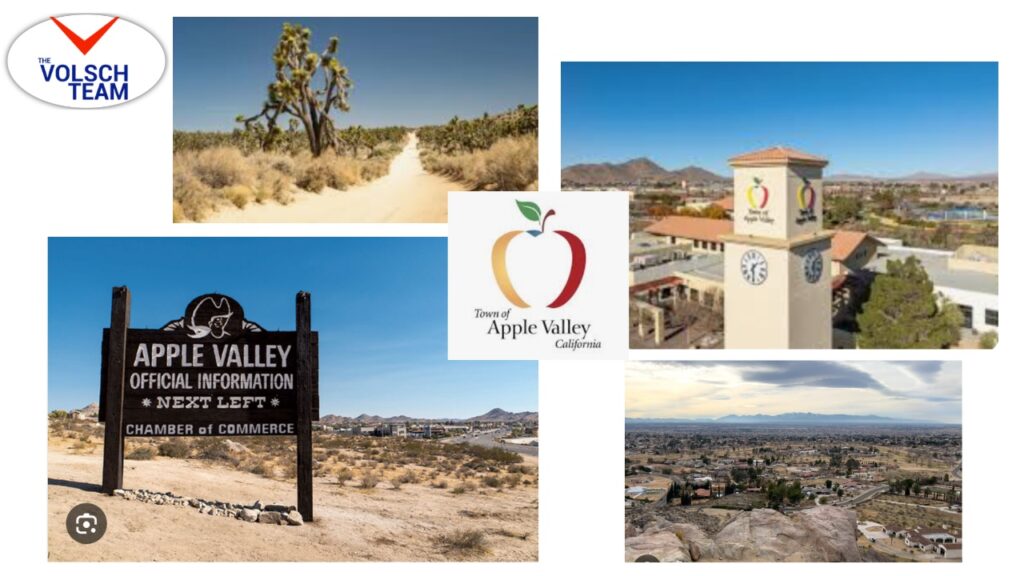
When most people think about Apple Valley, California, they picture a quiet High Desert community with wide-open skies, Joshua trees, and peaceful neighborhoods.
But the history of Apple Valley California stretches back far beyond modern homes and highways. Beneath the sandy soil of the Mojave Desert lies a story that reaches back more than 6,500 years.
Long before paved roads and modern development, the Mojave River served as the lifeline of the High Desert. In a region where water meant survival, the river created a natural corridor that allowed people to live, travel, and trade across the desert landscape.
Archaeologists have identified 48 historical and archaeological sites within Apple Valley and the surrounding area. Evidence shows that early inhabitants lived here through several cultural periods, beginning with the Newberry period (1500 B.C.–A.D. 500), followed by the Saratoga period (A.D. 500–1200) and the Tecopa period (A.D. 1200–1700s).
These early residents were not simply passing through the Mojave Desert. They built villages along the riverbanks, leaving behind rock shelters, milling stones used for grinding seeds and grains, and burial sites containing ceremonial objects.
Some of their most fascinating stories remain visible today.
Petroglyphs and pictographs carved into canyon walls in the Narrows along the Mojave River reveal images etched into stone centuries ago. These symbols represent the earliest form of communication and storytelling in Apple Valley’s history.
By the time European explorers entered the Mojave Desert, the valley was home to the Vanyume and Serrano peoples. The Serrano, whose name means “mountaineer” or “highlander” in Spanish, were skilled hunters, gatherers, and traders who understood the rhythms of the desert environment.
What many people don’t realize is that Apple Valley was never isolated.
It sat directly along the Mojave Trail, one of the most important travel routes in the Southwest. Indigenous travelers used the trail for centuries to move goods and maintain trade relationships across the desert.
Later generations simply followed the same path.
Portions of the Santa Fe Railroad traced the ancient trail. Eventually the legendary Route 66 passed through the Mojave Desert along a similar corridor, bringing travelers west in search of opportunity.
Today, modern travelers continue to use the same route in the form of Interstate 15, often without realizing they are following a pathway that humans have traveled for thousands of years.
History has a way of hiding in plain sight.
Wait… I Never Knew That!
If you’ve ever driven from Southern California toward Las Vegas on Interstate 15, you were unknowingly traveling one of the oldest human travel corridors in North America. The Mojave Trail helped shape the same pathway long before highways existed.
Charlotte’s Desert Reflection
The desert can look quiet and empty at first glance, but it has never truly been empty. For thousands of years people have come to this valley searching for water, opportunity, healing, or a new beginning. When I think about that history, it reminds me that every community is built one chapter at a time.
About Charlotte Volsch
Charlotte Volsch is an Apple Valley real estate broker specializing in probate and trust real estate throughout the High Desert and Inland Empire. Over the past 25 years in real estate, including more than 16 years focused specifically on probate and trust transactions, she has guided families through more than 774 estate-related property sales.
Charlotte works alongside attorneys, personal representatives, executors, administrators, and trustees, helping them navigate the often complex process of handling a loved one’s estate. Known for her calm guidance during difficult transitions, she has built a reputation as “the calm in the storm” for families managing probate and trust property decisions.