

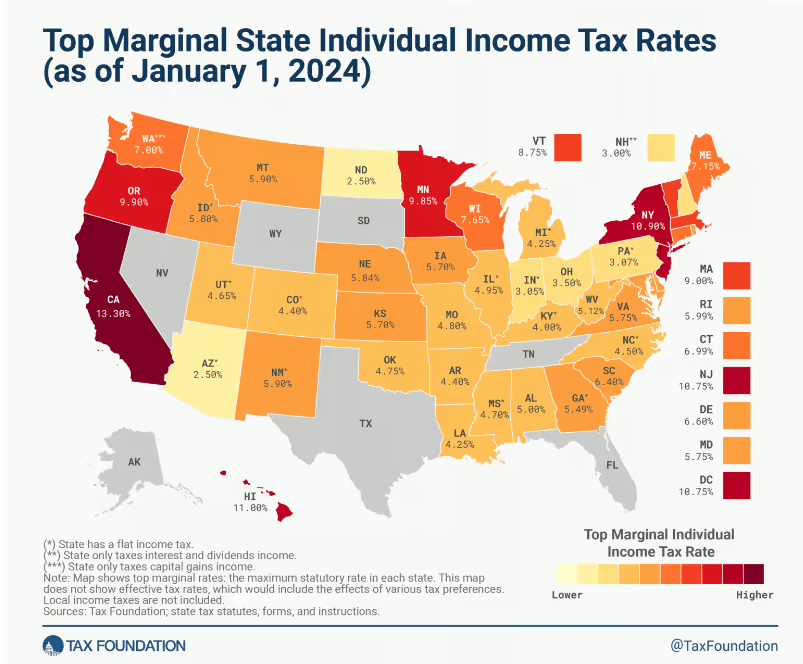
Last week we explored states that do not tax income at all, which means retirement income is automatically exempt. This week we are looking at another group of states that take a different approach. These states do have an income tax, but they specifically protect retirees by exempting retirement income from taxation.
For many people, this category is overlooked. Yet these states can be surprisingly retirement friendly, especially when combined with lower housing costs or strong community ties.
What It Means to Exempt Retirement Income
When a state exempts retirement income, it means distributions from Social Security, pensions, and qualified retirement accounts like 401k and IRA plans are not taxed at the state level. Other income such as wages, interest, dividends, and capital gains may still be taxed.
Understanding the distinction is important, especially for retirees who continue working part time or who rely heavily on investment income.
States That Exempt Retirement Income
Illinois has a flat income tax, but it does not tax retirement income of any kind. Social Security, pensions, and retirement account distributions are all exempt. However, Illinois has higher sales taxes and taxes groceries and estates above certain thresholds.
Iowa exempts retirement income for residents age fifty five and older. This includes distributions from 401k plans, IRAs, and even Roth conversions. Social Security is exempt at all ages. Iowa has moved toward a flatter income tax structure for other income.
Mississippi fully exempts retirement income and continues to lower its income tax rate on other earnings. There is no estate or inheritance tax, though groceries are taxed.
Pennsylvania exempts retirement income but taxes wages and investment income. It also imposes an inheritance tax that can affect heirs, which is an important consideration in estate planning.
A Note on 401k Withdrawals and Pensions
All of the states covered in this series exempt 401k withdrawals taken as retirement distributions. Early withdrawals may still be treated differently, and federal income tax always applies.
Many of these states are also considered pension friendly. Beyond this list, states like Alabama and Hawaii offer favorable treatment for certain pension plans depending on how the plan was funded.
Because pension rules can vary widely, it is wise to confirm specifics with a trusted tax professional.
Other Taxes Still Matter
Even when retirement income is exempt, other taxes can influence your overall cost of living. Sales taxes, property taxes, and estate or inheritance taxes vary widely from state to state.
A move motivated solely by income taxes may overlook factors that matter just as much in day to day life. The goal is balance, not perfection.
In a Nutshell
Some states protect retirees not by eliminating income taxes altogether, but by choosing not to tax retirement income. For the right person, these states can offer a comfortable blend of tax efficiency and lifestyle fit.